The 7 Chakras Explained: A Complete Guide to Energy Centers
SUMMARY
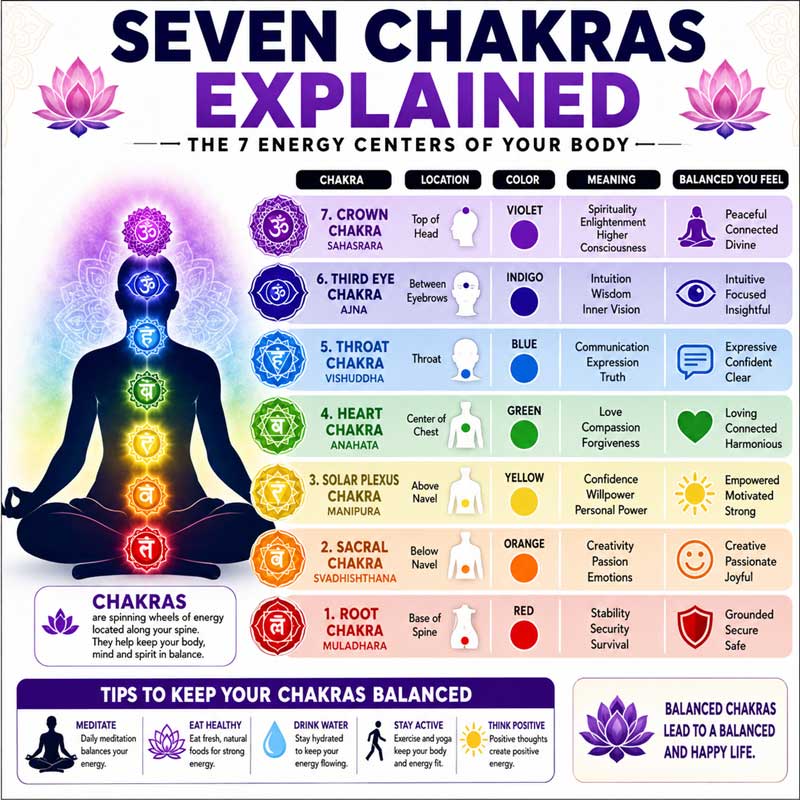
The seven chakras are energy centers believed to regulate physical, emotional, mental, and spiritual well-being. Originating in ancient Indian traditions, each chakra is associated with specific organs, emotions, colors, and qualities. Maintaining balance among these seven energy centers is thought to promote harmony, awareness, health, and inner peace.
The concept of chakras originated in ancient Indian spiritual traditions and is mentioned in several yogic and philosophical texts. The word “chakra” comes from Sanskrit and means “wheel” or “disk.” Chakras are often described as spinning wheels of energy located along the body’s central channel.
Although different traditions describe varying numbers of chakras, the seven-chakra system is the most widely recognized. According to this system, energy flows through the body from the base of the spine to the top of the head. When this energy moves freely, physical, emotional, and spiritual well-being are believed to remain balanced.
Each chakra influences particular aspects of life, including survival, creativity, confidence, love, communication, intuition, and spiritual awareness.
DOWNLOAD PDF
1. Root Chakra (Muladhara)
Location: Base of the spine
Color: Red
Associated Qualities:
- Stability
- Security
- Survival
- Grounding
The Root Chakra forms the foundation of the entire chakra system. It is associated with basic human needs such as food, shelter, safety, and physical well-being.
When this chakra is balanced, people often feel secure, stable, and connected to their environment. An imbalance may contribute to feelings of fear, anxiety, insecurity, or uncertainty.
Practices such as walking in nature, yoga, and grounding exercises are commonly used to support this chakra.
2. Sacral Chakra (Svadhisthana)
Location: Below the navel
Color: Orange
Associated Qualities:
- Creativity
- Passion
- Pleasure
- Emotional expression
The Sacral Chakra governs creativity, emotions, relationships, and enjoyment.
A balanced Sacral Chakra may encourage creativity, healthy relationships, and emotional openness. An imbalance may lead to emotional instability, lack of motivation, or creative blocks.
Activities such as dancing, artistic expression, and mindfulness practices are often recommended to support this energy center.
3. Solar Plexus Chakra (Manipura)
Location: Above the navel
Color: Yellow
Associated Qualities:
- Confidence
- Personal power
- Self-esteem
- Determination
The Solar Plexus Chakra is considered the center of personal strength and willpower.
People with a balanced Solar Plexus Chakra often display confidence, motivation, and a strong sense of purpose. An imbalance may result in low self-esteem, self-doubt, or difficulty making decisions.
Regular exercise, positive affirmations, and goal-setting activities are commonly associated with strengthening this chakra.
4. Heart Chakra (Anahata)
Location: Center of the chest
Color: Green
Associated Qualities:
- Love
- Compassion
- Forgiveness
- Empathy
The Heart Chakra acts as a bridge between the lower physical chakras and the higher spiritual chakras.
A balanced Heart Chakra encourages compassion, kindness, and healthy relationships. When blocked, it may contribute to loneliness, resentment, or emotional pain.
Practicing gratitude, forgiveness, and acts of kindness can help promote balance.
5. Throat Chakra (Vishuddha)
Location: Throat
Color: Blue
Associated Qualities:
- Communication
- Honesty
- Self-expression
- Truth
The Throat Chakra is associated with communication and the ability to express thoughts and feelings clearly.
People with a balanced Throat Chakra usually communicate effectively and speak honestly. An imbalance may result in difficulty expressing emotions or fear of speaking openly.
Journaling, singing, and mindful communication are often used to support this chakra.
6. Third Eye Chakra (Ajna)
Location: Between the eyebrows
Color: Indigo
Associated Qualities:
- Intuition
- Wisdom
- Insight
- Inner awareness
The Third Eye Chakra represents intuition and higher perception.
A balanced Third Eye Chakra may enhance concentration, imagination, and decision-making. An imbalance may cause confusion, lack of focus, or difficulty trusting one’s instincts.
Meditation and mindfulness practices are commonly associated with developing this chakra.
7. Crown Chakra (Sahasrara)
Location: Top of the head
Color: Violet
Associated Qualities:
- Spiritual awareness
- Consciousness
- Enlightenment
- Inner peace
The Crown Chakra is considered the highest energy center and is associated with spiritual growth and a deeper understanding of life.
People with a balanced Crown Chakra often experience a sense of purpose, peace, and connection. An imbalance may create feelings of isolation or spiritual disconnection.
Meditation, prayer, and self-reflection are traditional practices linked to this chakra.
Keeping the Chakras Balanced
While the chakra system is rooted in spiritual traditions, many of its practices overlap with modern wellness techniques. Meditation, yoga, healthy eating, regular physical activity, deep breathing, and adequate rest are commonly recommended for maintaining overall balance.
It’s important to remember that chakras are part of spiritual and philosophical traditions rather than established medical science. They should not replace professional medical advice or treatment.
For many people, however, the chakra system serves as a valuable framework for self-awareness, emotional growth, and personal development.
Key Takeaways
- Chakras are energy centers described in ancient Indian spiritual traditions.
- The seven chakras extend from the base of the spine to the top of the head.
- Each chakra is associated with specific emotions, functions, and qualities.
- The Root Chakra represents stability and survival.
- The Sacral Chakra governs creativity and emotions.
- The Solar Plexus Chakra influences confidence and personal power.
- The Heart Chakra is connected to love and compassion.
- The Throat Chakra supports communication and self-expression.
- The Third Eye Chakra represents intuition and insight.
- The Crown Chakra symbolizes spiritual awareness and enlightenment.
- Meditation, yoga, breathing exercises, and mindfulness are commonly used to support chakra balance.
FAQs
1. What are the seven chakras?
The seven chakras are energy centers believed to influence physical, emotional, and spiritual well-being.
2. Are chakras scientifically proven?
Chakras are part of ancient spiritual traditions and are not recognized as measurable physical structures in modern medicine.
3. Which chakra is associated with love?
The Heart Chakra is associated with love, compassion, empathy, and forgiveness.
4. Which chakra represents communication?
The Throat Chakra governs communication, honesty, and self-expression.
5. Can meditation balance the chakras?
Many spiritual traditions believe that meditation can help balance the chakras and improve overall well-being.
6. What color represents the Crown Chakra?
The Crown Chakra is traditionally represented by the color violet.
7. Can yoga help activate the chakras?
Many yoga practices are designed to support physical and emotional balance and are commonly associated with chakra activation.
8. Do all spiritual traditions recognize seven chakras?
No. Different spiritual traditions describe different numbers and interpretations of chakras, although the seven-chakra model is the most widely known.