What is the Difference Between Curd and Yoghurt
Summary
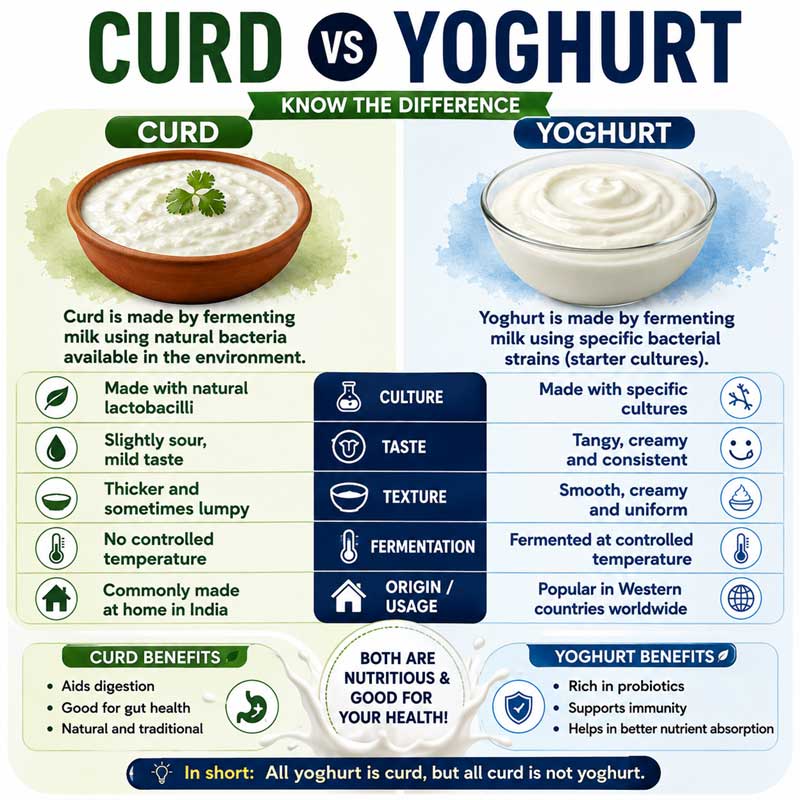
Curd and yoghurt are both fermented milk products, but they are not exactly the same. Curd is traditionally formed using naturally occurring or mixed bacterial cultures, while yoghurt is made using specific starter cultures under controlled conditions, giving it a more consistent taste and texture.
Detailed Explanation: Difference Between Curd and Yoghurt
Curd and yoghurt are often used interchangeably, especially because both are creamy, tangy foods made by fermenting milk. However, there is an important difference in the way they are prepared and the microorganisms involved.
What Is Curd?
Curd is a fermented milk product commonly prepared at home by adding a small amount of existing curd to warm milk. The microorganisms present in the starter multiply and convert some of the milk sugar, known as lactose, into lactic acid.
As lactic acid increases, the milk proteins begin to coagulate, turning liquid milk into a thicker, semi-solid product.
The exact microorganisms present in homemade curd can vary depending on the starter used, preparation conditions and surrounding environment. This is one reason why homemade curd may taste slightly different from one batch to another.
Curd is widely consumed in India and is used in many dishes, including raita, lassi, kadhi and marinades. Its taste can range from mild to noticeably sour depending on how long it has been allowed to ferment.
What Is Yoghurt?
Yoghurt is also made by fermenting milk, but it is generally produced using specific bacterial starter cultures. Traditional yoghurt production commonly involves the bacteria Streptococcus thermophilus and Lactobacillus delbrueckii subsp. bulgaricus.
These cultures are added to milk under controlled conditions. Because the bacterial cultures and fermentation process are standardized, yoghurt usually has a more predictable taste, texture and consistency.
Depending on the product, yoghurt may be plain, Greek-style, flavoured, sweetened or enriched with additional probiotic cultures.
The Main Difference: The Starter Culture
The biggest difference between curd and yoghurt lies in the cultures used to ferment the milk.
Homemade curd is often made by adding a spoonful of existing curd to milk. The microorganisms in that starter can vary from batch to batch.
Yoghurt, on the other hand, is typically made using selected and defined bacterial cultures. This controlled fermentation is one reason commercially produced yoghurt usually has a more uniform flavour and texture.
Difference in Taste and Texture
Curd can have a variable texture. Depending on the milk, starter and fermentation time, it may be thick, soft, slightly grainy or even release some whey.
Yoghurt is generally smoother and more consistent because of its controlled production process. However, the texture can still vary significantly between regular yoghurt, Greek yoghurt and other types.
In terms of taste, curd is often mildly sour, although longer fermentation can make it tangier. Yoghurt usually has a characteristic tangy flavour, but the exact taste depends on the cultures used and whether it contains added sugar, fruit or flavouring.
Are Curd and Yoghurt Equally Nutritious?
Both can provide important nutrients such as protein, calcium and other nutrients naturally found in milk. The exact nutritional value depends heavily on the type of milk used and whether the product contains added ingredients.
For example:
- Full-fat versions generally contain more fat and calories.
- Low-fat versions contain less fat.
- Sweetened or flavoured yoghurt may contain significantly more added sugar.
- Greek yoghurt is often higher in protein because some of the whey is strained out.
Both fermented dairy products may also contain live microorganisms, but the type and amount can vary. Not every product marketed as a yoghurt necessarily contains the same probiotic strains or amounts.
Which One Is Better?
There is no universal winner.
If you enjoy traditional homemade food, curd can be an excellent choice. It is versatile and easy to prepare using milk and a starter.
If you prefer a more consistent texture and specifically defined starter cultures, yoghurt may be a better option.
For a healthier everyday choice, it is often more useful to compare plain, unsweetened products rather than simply choosing between the words “curd” and “yoghurt.”
In simple terms, both are fermented milk products, but the way they are cultured and standardized is what mainly sets them apart.
Key Takeaways
- Both curd and yoghurt are fermented milk products.
- Curd is commonly made by adding an existing curd starter to milk.
- Yoghurt is generally made using specific, defined bacterial cultures.
- Curd can vary in taste and texture from batch to batch.
- Yoghurt usually has a more controlled and consistent texture and flavour.
- Both can provide protein, calcium and other nutrients.
- Added sugar and flavourings can significantly change the nutritional profile.
- The best choice for everyday consumption is often a plain, unsweetened version that suits your dietary preferences.