Why Popcorn Pops?
Summary
Popcorn pops because each kernel contains a small amount of water trapped inside a hard outer shell. When heated, the water turns into steam, creating intense pressure. Once the pressure becomes strong enough, the shell ruptures. The heated starch rapidly expands and cools into the fluffy popcorn we love.
DOWNLOAD PDF
Why Does Popcorn Pop?
Popcorn popping is a fascinating example of how heat, water, pressure, and starch work together. Although a popcorn kernel looks small and simple, it contains everything needed to create the fluffy snack we know.
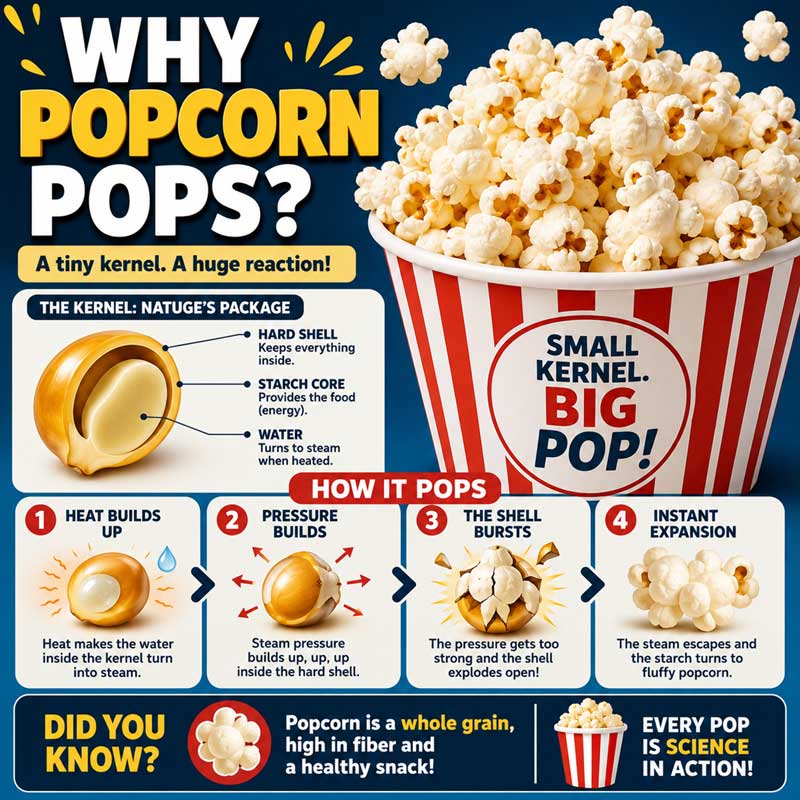
Inside every popcorn kernel is a small amount of moisture, usually around 13–15% water, surrounded by a hard outer shell called the pericarp. The kernel also contains starch, which provides the material that eventually becomes the soft, white popcorn.
When the kernel is heated, the water trapped inside begins to turn into steam. Because the outer shell is relatively strong and prevents the steam from escaping easily, pressure starts building inside the kernel.
As the temperature continues to rise, the pressure becomes greater and greater. Eventually, the shell can no longer contain the pressure and bursts open.
At this moment, something spectacular happens. The hot, pressurized starch inside the kernel rapidly expands as the pressure suddenly drops. The starch changes from its compact form into a lightweight, airy structure. It quickly cools and solidifies, creating the familiar fluffy popcorn shape.
This is why popcorn doesn’t simply become hot—it actually explodes into a completely different shape.
The kernel’s moisture is particularly important. If a kernel contains too little moisture, it may heat up without producing enough steam pressure to pop properly. If the shell is damaged, steam can escape before enough pressure develops, which can also result in an unpopped kernel.
The popping process can happen extremely quickly. A single kernel can expand many times beyond its original size, transforming from a hard, dense seed into a light and crunchy piece of popcorn.
So, the next time you hear popcorn popping, you’re actually hearing the sound of tiny pressure explosions caused by water turning into steam inside the kernels.
The simple science:
Heat → Water becomes steam → Pressure builds → Shell bursts → Starch expands → Popcorn!
That’s the science behind one of the world’s most recognizable movie snacks.
Key Takeaways
- 🌽 Popcorn kernels contain water, starch, and a hard outer shell.
- 🔥 Heating the kernel turns its internal water into steam.
- 💨 The trapped steam creates high pressure inside the kernel.
- 💥 When the shell breaks, the pressure is suddenly released.
- ☁️ The hot starch rapidly expands and forms fluffy popcorn.
- 🌡️ Proper moisture inside the kernel is essential for popping.
- 🍿 An unpopped kernel may have insufficient moisture or a damaged shell.
- 🔬 Popcorn is essentially a tiny steam-powered food explosion.
FAQs
1. Why does popcorn pop?
Popcorn pops because heat turns water inside the kernel into steam. The resulting pressure eventually breaks the hard shell, allowing the starch to rapidly expand.
2. What is inside a popcorn kernel?
A kernel contains mainly starch, a small amount of water, and a hard outer shell called the pericarp.
3. What makes the pressure inside popcorn increase?
As the kernel heats up, its internal water turns into steam. Because the steam is trapped inside the hard shell, pressure increases.
4. Why doesn’t every popcorn kernel pop?
Some kernels may have too little moisture, a damaged outer shell, or other structural problems that prevent enough pressure from developing.
5. How does popcorn become fluffy?
When the shell bursts, the pressurized starch expands rapidly. The expanded starch cools and forms the light, airy structure of popcorn.
6. Can popcorn pop without heat?
Under normal conditions, popcorn needs heating to produce the steam pressure required for popping.
7. Why do some kernels pop more dramatically than others?
Differences in moisture content, shell strength, kernel structure, and heating can affect how well a kernel pops.
8. Is popcorn a grain?
Yes. Popcorn is a type of whole grain because it is a variety of corn that naturally contains the bran, germ, and endosperm.