Why Do we Paint Iron Articles
SUMMARY
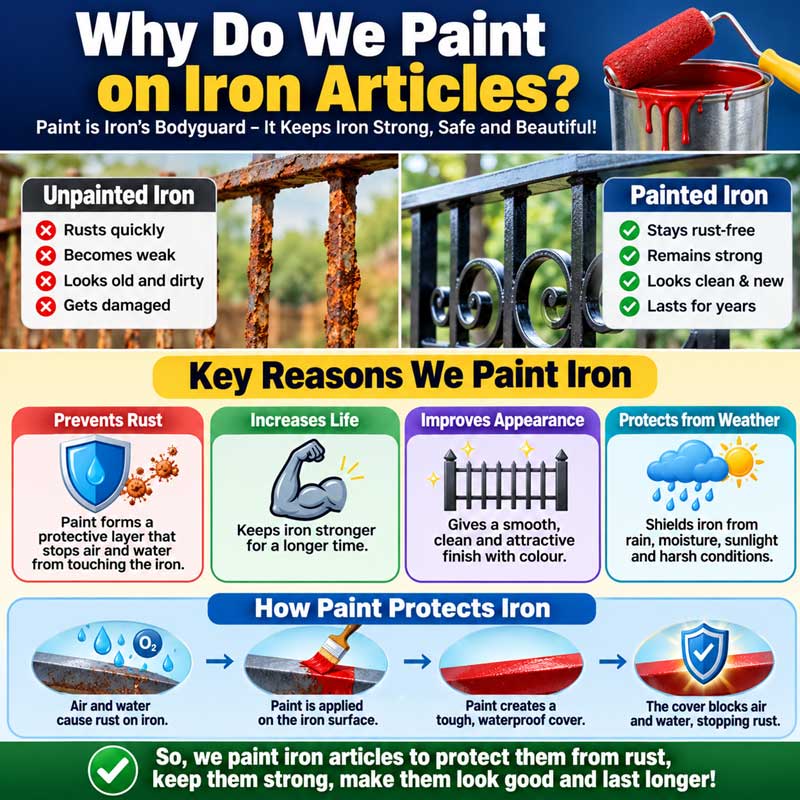
We paint iron articles to protect them from rust and corrosion. Paint forms a protective barrier that prevents oxygen, moisture, and other corrosive elements from reaching the iron surface. This increases durability, improves appearance, reduces maintenance, and extends the useful life of iron objects such as gates, tools, and nails.
DOWNLOAD PDF
Why Do We Paint Iron Articles?
Iron is a strong and useful metal, but it has one major weakness: it can easily react with oxygen and moisture in the environment and develop rust. Rust gradually damages the iron surface and can weaken the object over time. This is the main reason why we paint the iron objects.
Paint creates a protective coating over the iron surface. When the coating is intact, it acts as a barrier between the metal and the surrounding air and moisture. By limiting contact with oxygen and water, paint helps slow down the corrosion process and keeps the iron protected for a longer period.
Why Do We Apply Paint on Iron Articles?
The simplest answer to why do we apply paint on iron articles solution is that painting provides a practical way to prevent rust and corrosion. It also gives iron objects a cleaner and more attractive appearance.
The process can be understood through a simple chemical reaction. When iron comes into contact with oxygen and water, it gradually undergoes corrosion. The iron is oxidized, producing iron compounds that eventually form the familiar reddish-brown substance called rust.
In simplified form:
Iron + Oxygen + Water → Rust
Therefore, when asked why do we apply paint on iron articles reaction, the important point is that paint prevents or slows the conditions necessary for this reaction. It does not permanently change the iron into another metal; instead, it creates a protective layer that separates the iron from moisture and oxygen.
What Happens If Iron Is Not Painted?
Unprotected iron exposed to humid air or water can begin to corrode. At first, small rust spots may appear. With continued exposure, corrosion can spread and cause the surface to become rough, flaky, and weaker.
This is particularly important for outdoor iron objects such as gates, railings, fences, bridges, agricultural equipment, and garden furniture. Regular painting and maintenance can significantly reduce exposure to moisture and help protect these surfaces.
Why Do We Paint Iron Nail Articles?
The question why do we apply paint on iron nail articles has the same basic answer: painting helps protect the iron nail from moisture and oxygen, reducing the possibility of rust.
For example, an iron nail left in a damp environment can gradually develop a reddish-brown coating. If the nail is painted properly, the coating can act as a barrier and reduce contact between the iron and the surrounding environment.
However, paint only provides protection while the coating remains intact. Scratches, cracks, or damaged areas can expose the underlying metal. Therefore, damaged paint should be repaired when necessary.
What Do You Paint Wrought Iron With?
If you are wondering what do you paint wrought iron with, the choice depends on the object, environment, and desired finish. Wrought iron is commonly prepared with a suitable metal primer followed by an appropriate metal paint or direct-to-metal coating.
For outdoor wrought-iron gates, railings, fences, and furniture, a corrosion-resistant metal primer and durable exterior metal paint can provide good protection. Epoxy-based systems, alkyd enamel paints, and other coatings specifically formulated for metal may also be used depending on the application.
Before painting, the surface should generally be cleaned and loose rust, old flaking paint, grease, and dirt should be removed. Proper surface preparation is important because even high-quality paint may fail prematurely when applied over loose rust or contaminants.
Predict Why Do We Apply Paint on Iron Articles
If asked to predict why do we apply paint on iron articles, consider what happens when iron is exposed to air and moisture. The unprotected surface gradually develops rust, whereas a properly painted surface has a protective barrier.
Thus, painting is primarily a method of corrosion prevention. It helps iron objects remain stronger, cleaner, and more attractive for longer periods.
Painting also provides additional benefits. It can improve the appearance of an object by adding colour and a smooth finish. It can make surfaces easier to maintain and, by reducing corrosion-related damage, potentially reduce the need for frequent repairs or replacement.
In everyday life, this simple protective method can be seen on iron gates, railings, tools, machinery, bridges, fences, furniture, nails, and many other metal products.
Key Takeaways
- Paint prevents rust: It creates a barrier that limits contact between iron, oxygen, and moisture.
- Iron rusts through corrosion: Oxygen and water contribute to the corrosion of exposed iron.
- Painting extends service life: Protecting the surface can help iron objects remain usable for longer.
- Painting improves appearance: It provides colour, a smoother finish, and a cleaner look.
- Damaged paint should be repaired: Scratches and cracks can expose iron to moisture and oxygen.
- Surface preparation matters: Removing loose rust, dirt, grease, and old flaking paint improves coating performance.
- Wrought iron requires suitable coatings: A metal primer and appropriate exterior metal paint are common choices for outdoor applications.
- Iron nails can also rust: Painting an iron nail can reduce its exposure to moisture and oxygen.
- The basic reaction: Iron + oxygen + water leads to corrosion and rust formation.
- The main reason why we paint the iron objects is to protect them from corrosion while improving their appearance and durability.
FAQs
1. Why do we paint iron articles?
We paint iron articles mainly to protect them from rust and corrosion. Paint forms a protective layer that reduces the contact of iron with oxygen and moisture.
2. Why do we apply paint on iron articles?
We apply paint on iron articles to prevent or slow down corrosion, increase durability, improve appearance, and reduce maintenance.
3. Why do we apply paint on iron articles reaction?
Iron reacts with oxygen and moisture and gradually forms rust. Paint acts as a barrier that reduces the contact of iron with these substances, thereby slowing the corrosion reaction.
4. Why do we apply paint on iron articles solution?
The practical solution to preventing rust on exposed iron is to apply a suitable protective coating after properly preparing the metal surface. Painting helps isolate the iron from moisture and oxygen.
5. Why do we apply paint on iron nail articles?
Iron nails can rust when exposed to oxygen and moisture. Painting the nail creates a protective coating that helps reduce this exposure and slows rust formation.
6. What do you paint wrought iron with?
Wrought iron can be painted using a suitable metal primer followed by durable metal paint. For outdoor applications, corrosion-resistant exterior coatings are generally preferred.
7. Does paint completely stop rust?
Not necessarily. Paint can greatly reduce exposure to moisture and oxygen, but scratches, cracks, peeling, or poor surface preparation can allow corrosion to begin underneath or at exposed areas.
8. What happens when iron is left unpainted?
Unprotected iron can react with oxygen and moisture and gradually develop rust. Continued corrosion can roughen the surface and eventually weaken the object.
9. How does paint protect iron from rust?
Paint forms a physical barrier between the iron and its surroundings. This reduces the amount of water and oxygen reaching the metal surface and therefore slows corrosion.
10. Why is painting important for outdoor iron objects?
Outdoor iron objects are regularly exposed to rain, humidity, condensation, and changing weather conditions. A suitable protective coating helps reduce corrosion and prolongs their useful life.