Why Do We Feel Sleepy After Eating?
Summary
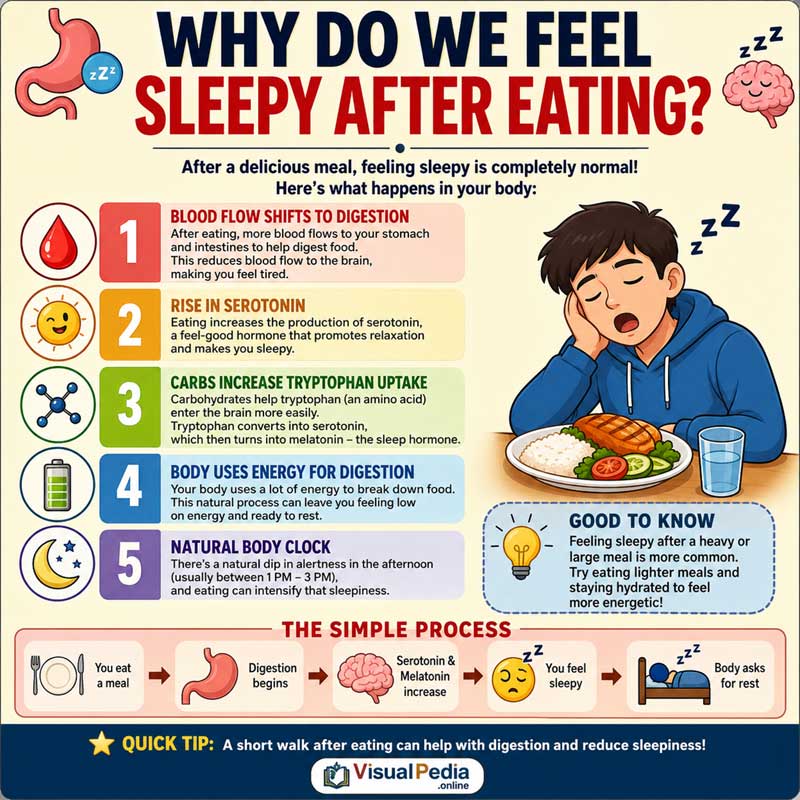
Feeling sleepy after eating is a normal biological response. Digestion requires energy, certain foods influence sleep-related hormones, and your body’s natural circadian rhythm can increase drowsiness, especially after large meals or carbohydrate-rich foods.
DOWNLOAD PDF
After enjoying a satisfying meal, many people experience an overwhelming desire to lie down or take a nap. This feeling, commonly known as a “food coma” or post-meal drowsiness, is completely normal and affects people of all ages.
But why does this happen?
The answer lies in a combination of digestion, hormones, blood sugar changes, and your body’s internal clock.
1. Your Body Redirects Resources Toward Digestion
Digestion is a complex process that requires significant energy.
After eating, your stomach and intestines begin breaking down food into nutrients that your body can absorb. This process involves muscle contractions, digestive enzymes, hormone production, and nutrient transportation.
Because digestion demands additional energy, your body shifts its focus toward the digestive system. As a result, many people experience a temporary reduction in energy levels, making them feel tired.
2. Certain Foods Increase Serotonin Production
The foods you eat can directly influence your brain chemistry.
Foods rich in carbohydrates increase the production of serotonin, a neurotransmitter that helps regulate mood, relaxation, and sleep.
Higher serotonin levels create a calming effect that can make you feel more relaxed after eating.
Serotonin also serves as a building block for melatonin, the hormone responsible for regulating sleep.
3. Tryptophan Plays an Important Role
Tryptophan is an amino acid found in many foods, including:
- Turkey
- Chicken
- Eggs
- Cheese
- Milk
- Fish
Tryptophan helps your body produce serotonin.
Although turkey often receives the blame for causing drowsiness, the truth is that many protein-rich foods contain tryptophan. The real reason people feel sleepy after a meal is usually the combination of protein and carbohydrates.
Carbohydrates help tryptophan enter the brain more efficiently, leading to increased serotonin production.
4. Large Meals Cause Greater Sleepiness
Meal size also matters.
A large meal requires more digestive activity than a smaller one. Heavy meals rich in carbohydrates, fats, and sugars place additional demands on your digestive system.
Common foods that may increase post-meal drowsiness include:
- White rice
- Pasta
- Bread
- Fried foods
- Sugary desserts
These foods can cause blood sugar levels to rise rapidly. When blood sugar eventually drops, feelings of fatigue may become more noticeable.
5. Your Internal Body Clock Influences Alertness
Your body’s circadian rhythm regulates sleep and wakefulness throughout the day.
Most people naturally experience a decrease in alertness during the early afternoon, usually between 1 PM and 3 PM.
If you eat lunch during this period, the effects of digestion and your body’s natural energy dip can combine, making you feel even sleepier.
This explains why many cultures around the world traditionally include an afternoon rest or short nap.
6. Age, Sleep Quality, and Lifestyle Also Matter
Several additional factors can make post-meal sleepiness more noticeable:
- Sleep deprivation
- Physical inactivity
- Stress
- Dehydration
- Medical conditions such as diabetes
People who don’t get enough sleep at night are much more likely to experience extreme drowsiness after meals.
How Can You Reduce Sleepiness After Eating?
You don’t have to eliminate your favorite foods to stay alert.
Try these simple strategies:
- Eat smaller meals.
- Avoid excessive amounts of sugar.
- Include protein, fiber, and vegetables in your meals.
- Stay hydrated.
- Take a short walk after eating.
- Maintain a regular sleep schedule.
A 10- to 15-minute walk after a meal can improve digestion, stabilize blood sugar levels, and boost energy.
Key Takeaways
- Feeling sleepy after eating is a normal biological response.
- Digestion requires a significant amount of energy.
- Carbohydrates increase serotonin production.
- Tryptophan contributes to the production of sleep-related hormones.
- Heavy meals are more likely to cause drowsiness.
- Your body’s internal clock naturally reduces alertness during the afternoon.
- Smaller, balanced meals can help reduce post-meal fatigue.